DuploCloud
DevOps AI Agent
SnapshotROLE SCOPE OUTCOME STACK | ||
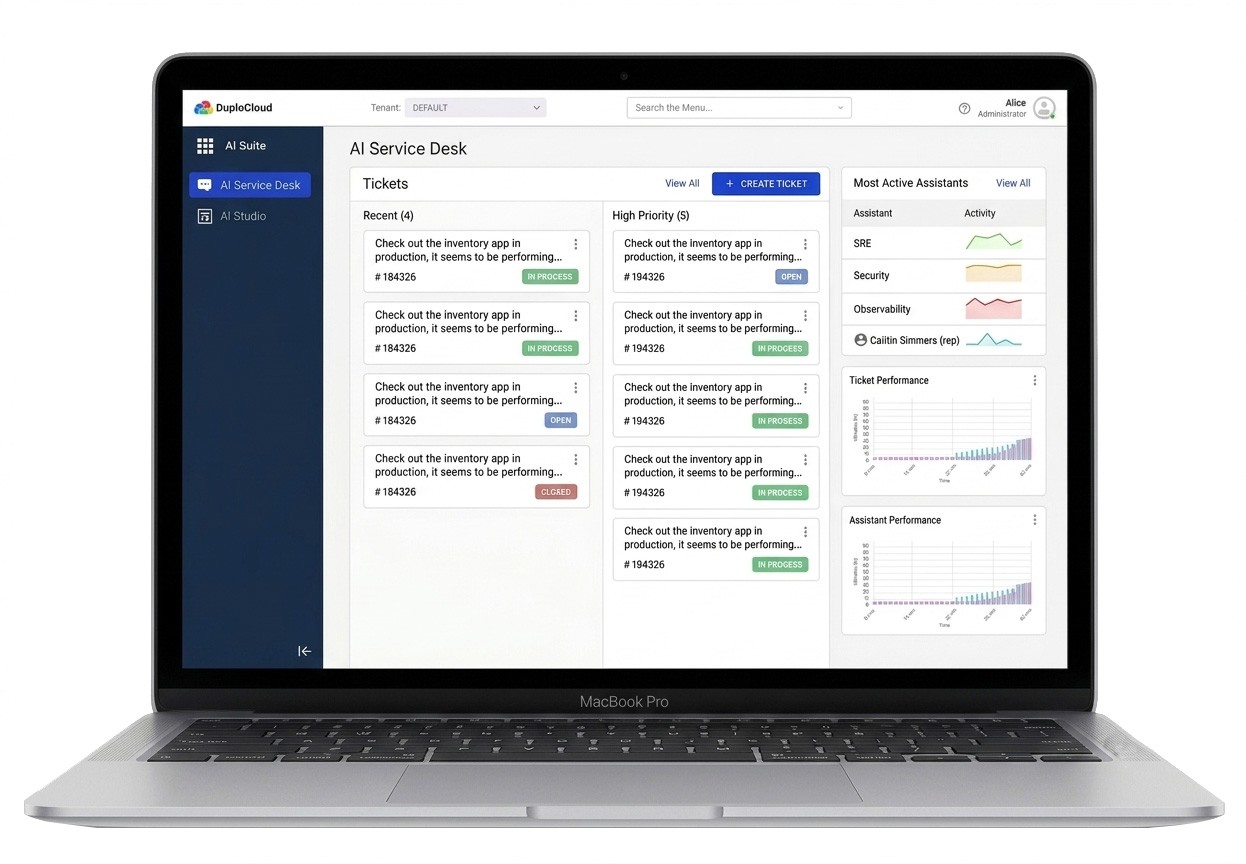
Designed a first-of-its-kind agentic AI experience inside a DevOps platform. A help/service desk style ticketing system reinvented around a conversational AI + canvas pattern, where users collaborate with AI agents to provision, monitor, and remediate cloud infrastructure.
The IA, workflow, user interfaces and interaction patterns I delivered where early stage concepts used to inform leadership decision making. These designs did not go to production, but used as foundational knowledge.
The challenge
DuploCloud is a startup that automates cloud infrastructure provisioning, management, and compliance, often described as "DevOps-as-a-Service."
Their customers are small-to-medium businesses that need to stand up and maintain cloud environments but don't have dedicated DevOps teams. Internal engineers, often without specialized DevOps expertise, are left to handle work outside their skill set.
Those engineers need two things at once:
Comprehensive guidance during setup, so installations are complete, secure, and performant
Continuous observability & remediation support post-install, so issues get caught early and fixed fast
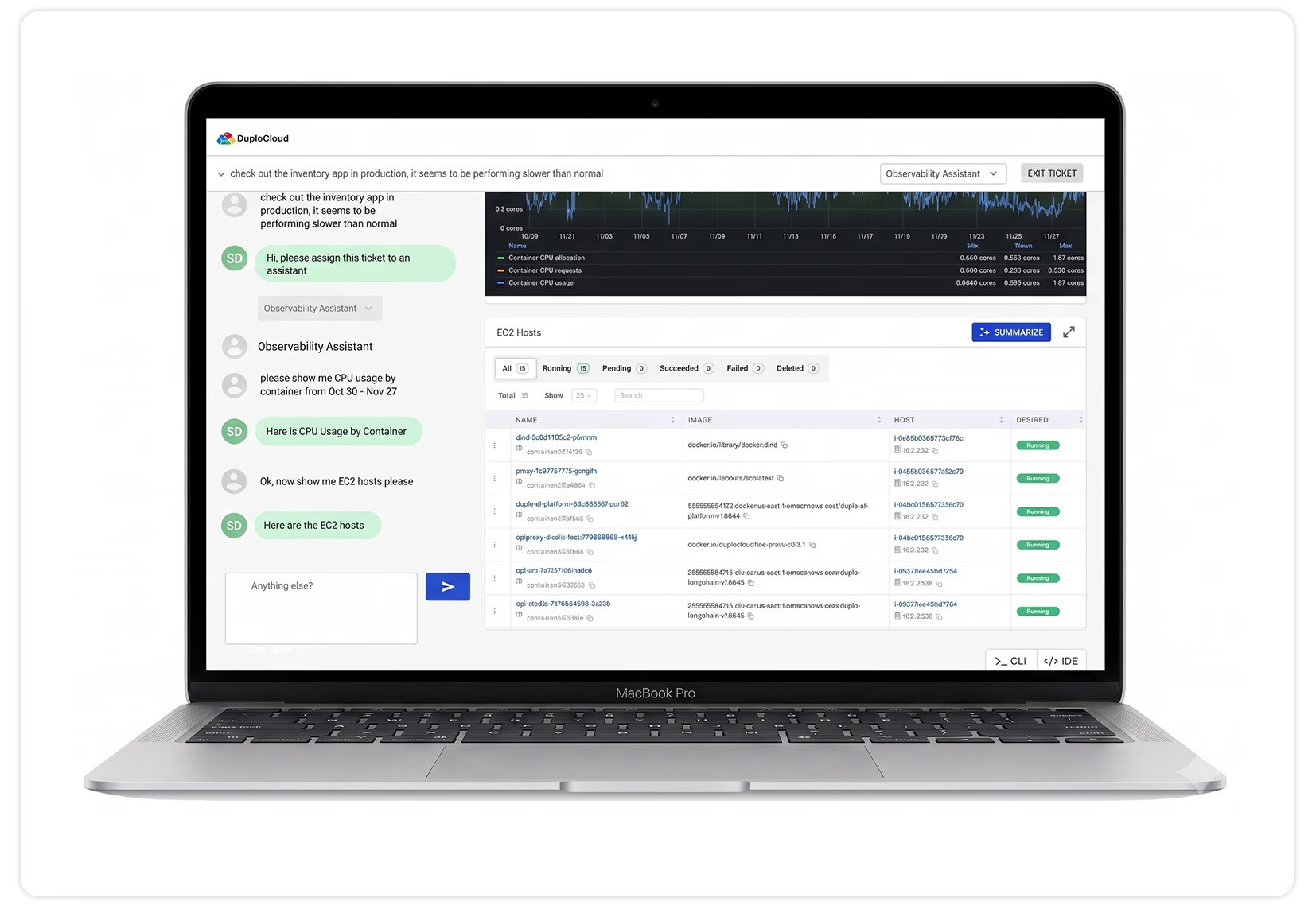
Leadership wanted to address both with a single feature: an agentic AI experience inside the DuploCloud platform that would give engineers a help desk style collaborator capable of handling tasks conversationally, while showing its work on a canvas the engineer could review, edit, and approve.
Agentic AI was new ground. There were no established UX patterns to copy. The feature had to feel approachable for non-DevOps engineers, transparent enough to build trust, and powerful enough to actually do the work, all while fitting into DuploCloud's existing design system on a 1.5 month timeline.
Help desk research
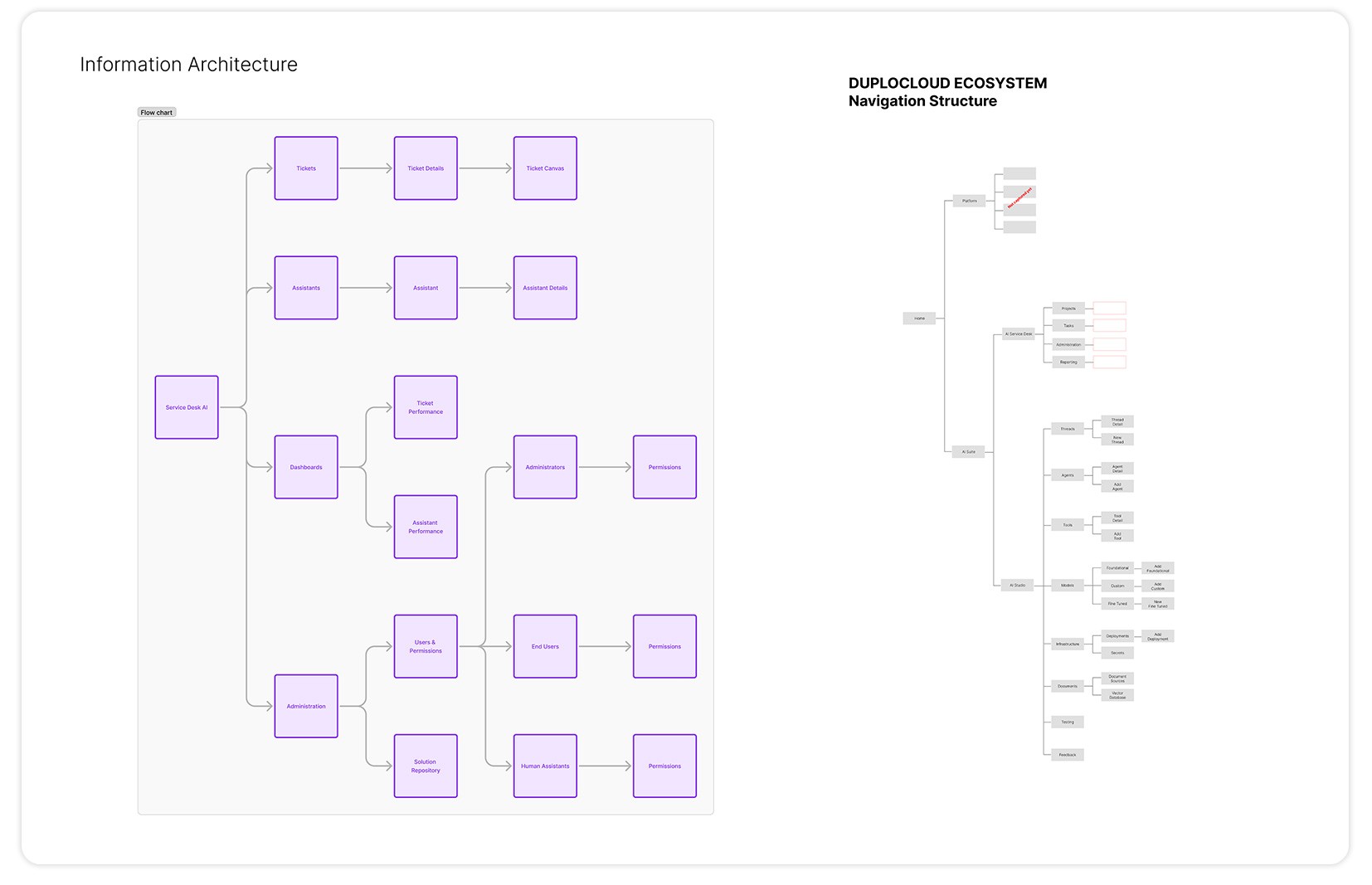
I designed an IA that emulates the structure of a help/service desk ticketing system, modified for an agentic AI context.
The familiar pattern (tickets, status, history, assignment) gives non-DevOps engineers immediate orientation. The modifications (agents instead of human operators, canvas instead of chat-only, real time action instead of email back-and-forth) make the experience genuinely new.
Help desk research
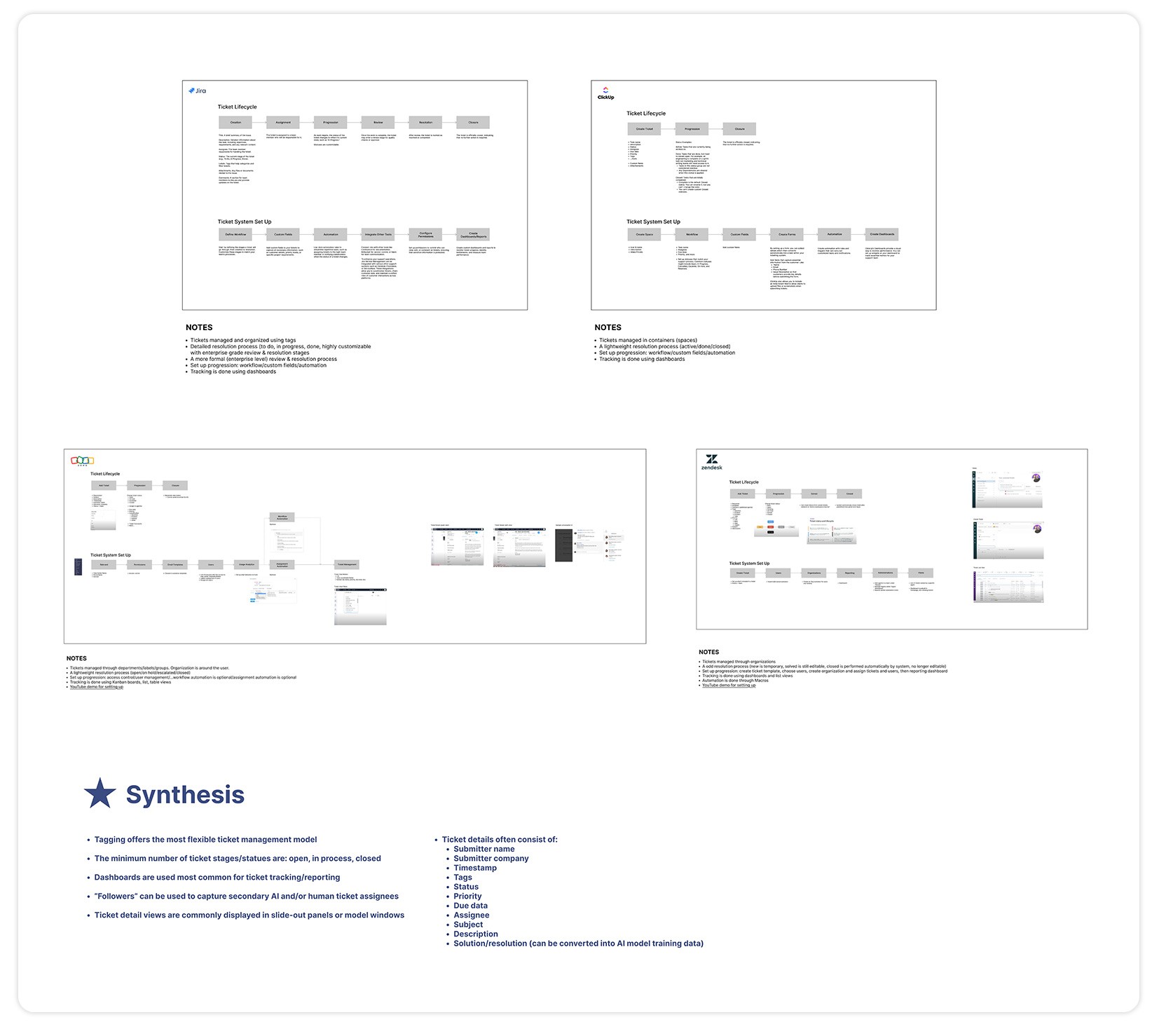
Information architecture and navigation structure, based upon research findings
Key decisions
AI assistants as first-class entities with their own detail pages, capabilities, and history, so users understand who they're working with
Tickets become collaborative sessions rather than one-way requests
Canvas as a visible workspace where the agent's actions are reviewable, not hidden behind chat bubbles
Observability as a destination, not a side panel, the agentic AI experience is built around proactive monitoring as much as reactive ticketing
Workflow design
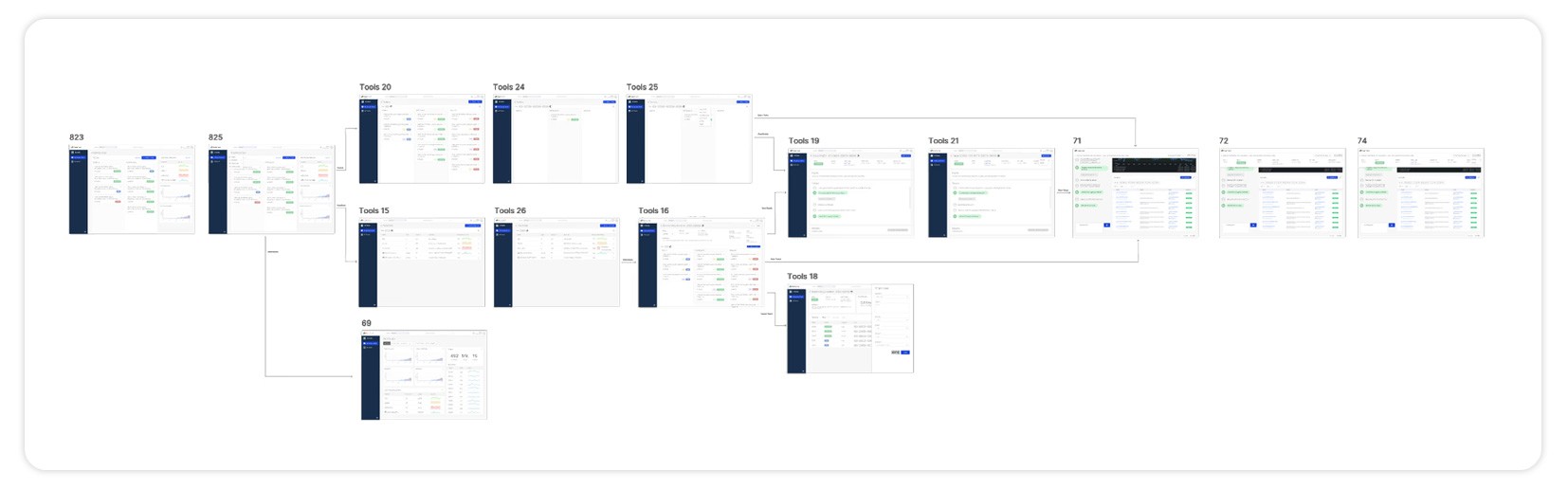
Collaborating with senior engineering, I mapped the end-to-end workflow:
How a user opens a session
How the agent interprets intent
How the canvas updates as the agent works
How completion and approval are handled
How observability assistants surface issues before the user knows to ask
Ticketing workflow (within Service Desk section)
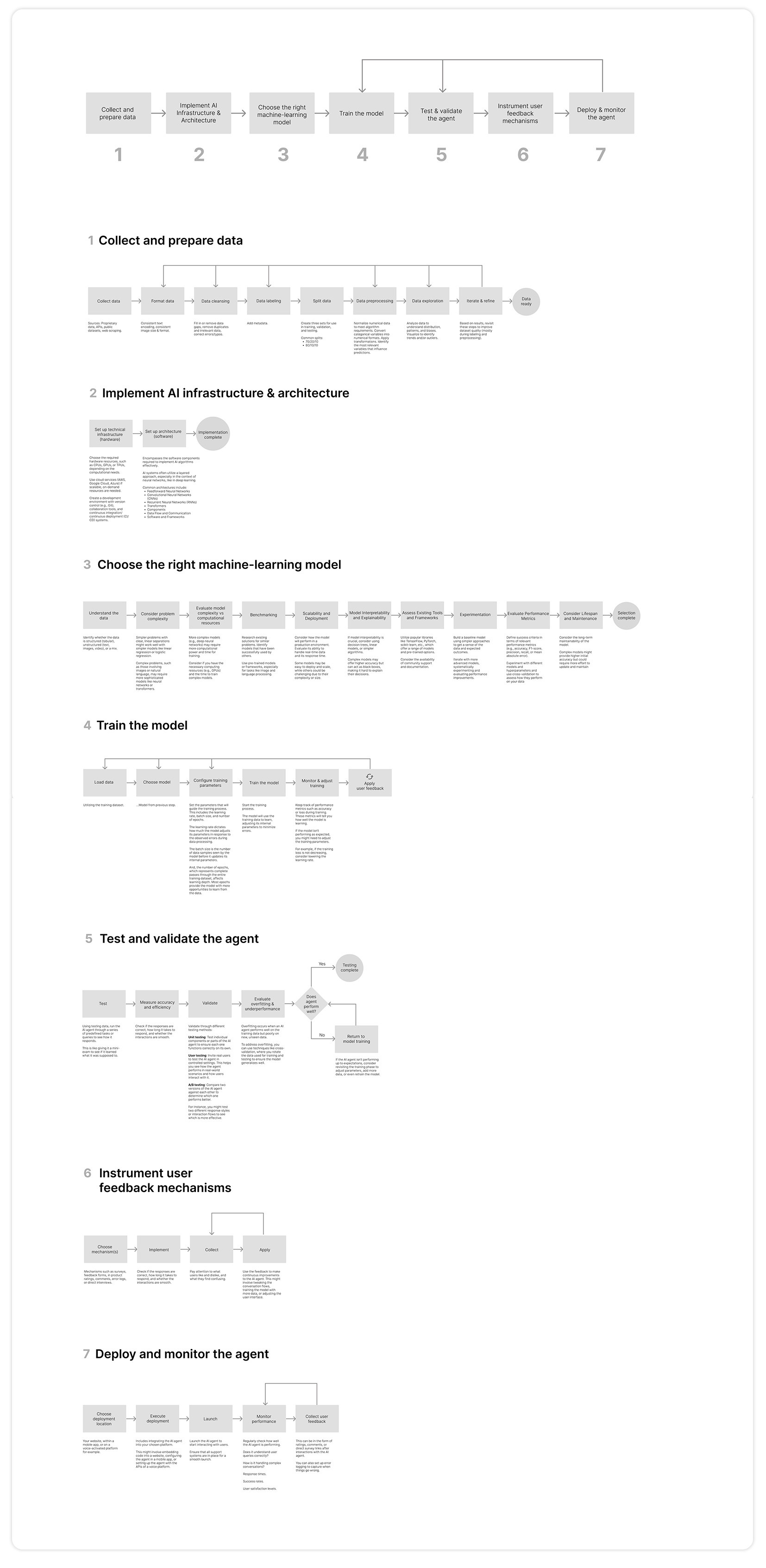
AI agent creation workflow (within Studio section)
Visual design
Working within DuploCloud's existing design system, I produced high-fidelity visual designs for the primary (happy path):
Dashboard, observability-first view, surfacing what the agents are watching and what's drawing attention
AI assistants directory, a catalog of available agents with capabilities, examples, and recent usage
AI assistant detail, the deep view of a single agent, its capabilities, history, and an entry point to a new session
Agentic AI session view (observability assistant), the conversational + canvas workspace where the user and the agent collaborate
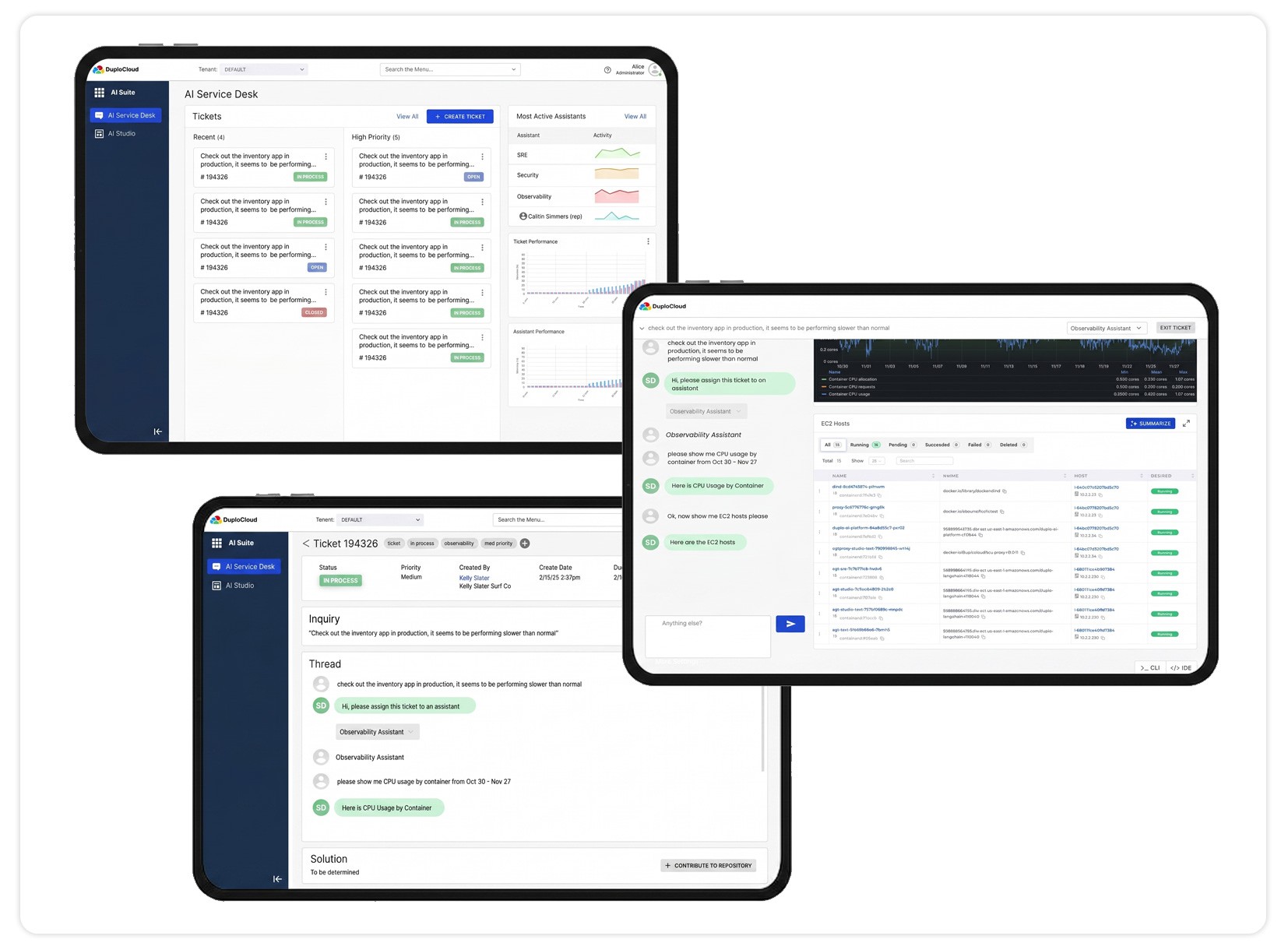
The visual design work prioritized:
Trust signals throughout, agent reasoning visible, source attribution where applicable, confirm-before-commit on destructive actions
Density without clutter, DevOps engineers expect information-rich screens, the design system handled this well, the agentic AI patterns extended it without breaking it
Consistent agent identity, every agent has a recognizable visual treatment so users know which assistant they're working with at a glance
Team structure
I worked directly with DuploCloud's leadership and senior AI engineer throughout. As the sole designer on the project, I owned every artifact end to end, from research synthesis to high-fidelity Figma specs.
Outcome
Delivered on time, on budget. Within the 1.5 month engagement, I delivered the requested IA, workflow, and high-fidelity visual designs for the agentic AI feature.
DuploCloud's team used the work to inform product decisions and execute against an aggressive release timeline.
The feature is now live in the DuploCloud platform.
The deliverable distinction matters at the senior level. Pixels are iteration. The thinking underneath, how the agent and user collaborate, how the canvas surfaces work, how trust is built moment by moment, is the durable contribution. Setting DuploCloud up for success today, and tomorrow.
Why this work matters
Agentic AI is the most heavily-explored, least-defined design space in software right now.
Every major platform is racing to ship some version of "talk to the AI, watch it work" experience, but few have figured out the interaction patterns that actually work, when to interrupt, when to confirm, when to show reasoning, when to hide complexity, how to maintain user control without slowing the agent down.
The DuploCloud project was a chance to design those patterns from scratch in a real production context, with real customers, real engineers, and a hard deadline.
The conversational + canvas pattern, the help desk style IA, the trust signals, the confirmation choreography, those weren't hypotheticals on a Figma board. They informed what shipped.
For a lead product designer in 2026, that's the relevant proof: not "I've used AI tools" but "I've designed agentic AI patterns that work in real world scenarios".