Scholars in Medicine
FDA-compliant AI Agent
SnapshotROLE SCOPE OUTCOME STACK | ||
Sole designer for a continuing medical education platform serving dermatology, gastroenterology, rheumatology, and other specialties.
I lead design strategy, full lifecycle product design, oversight of an external design & development agency.
Primarily focused on new user activation, retention, and Ask Simon (clinical AI agent).
Ask Simon: an FDA-complaint clinical AI agent
The challenge
Ask Simon v1 is Scholars in Medicine's first AI agent, a conversational tool that helps clinicians get answers grounded in SiM's clinician-developed materials and trusted medical sources.
V1 works, but the product roadmap demanded more
New data sources
Expanded clinical capabilities
Richer responses with embedded references
Regulatory compliance
The FDA Clinical Decision Support Software (CDSS) guidance (issued January 29, 2026) changed the rules for how AI tools can present clinical information to healthcare professionals. v2 needed to be designed to meet those guidance from the ground up, not retrofitted later.
This was a larged scope effort spanning research, regulatory analysis, content strategy, visual design, user interface, and interaction models.
Regulatory research
Research document
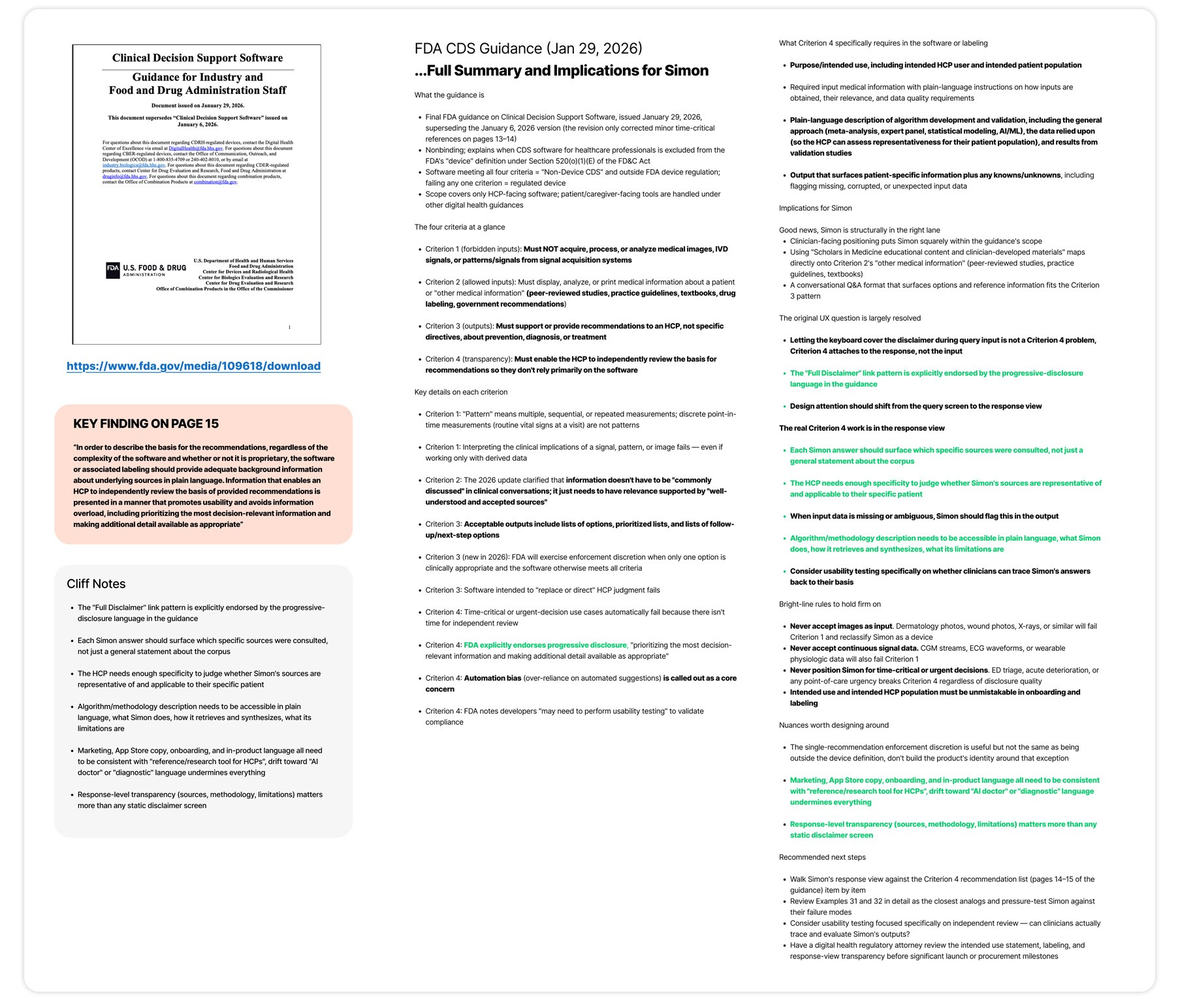
After close review of the FDA's CDS guidance I produced a synthesis that leadership used to scope the overall effort, and became a design requirements document.
The guidance defines four criteria that determine when CDSS must comply with FDA medical device regulations.
Key findings extracted from the guidance and used to drive design include:
The "full disclaimer" pattern is explicitly endorsed by the progressive disclosure language in the guidance
Each Simon answer should surface which specific sources were consulted
Disclosures need to be specific enough to judge whether a source is representative of and applicable to a specific patient
The Health Care Practitioner (HCP) needs to be able to access representations for their patient population, and results from validation studies
Algorithm and methodology descriptions need to be accessible in plain language, what Simon (AI agent) does, how it retrieves and synthesizes, and what its limitations are
Response-level transparency (sources, methodology, limitations) matters more than any static disclaimer screen
The disclosure system
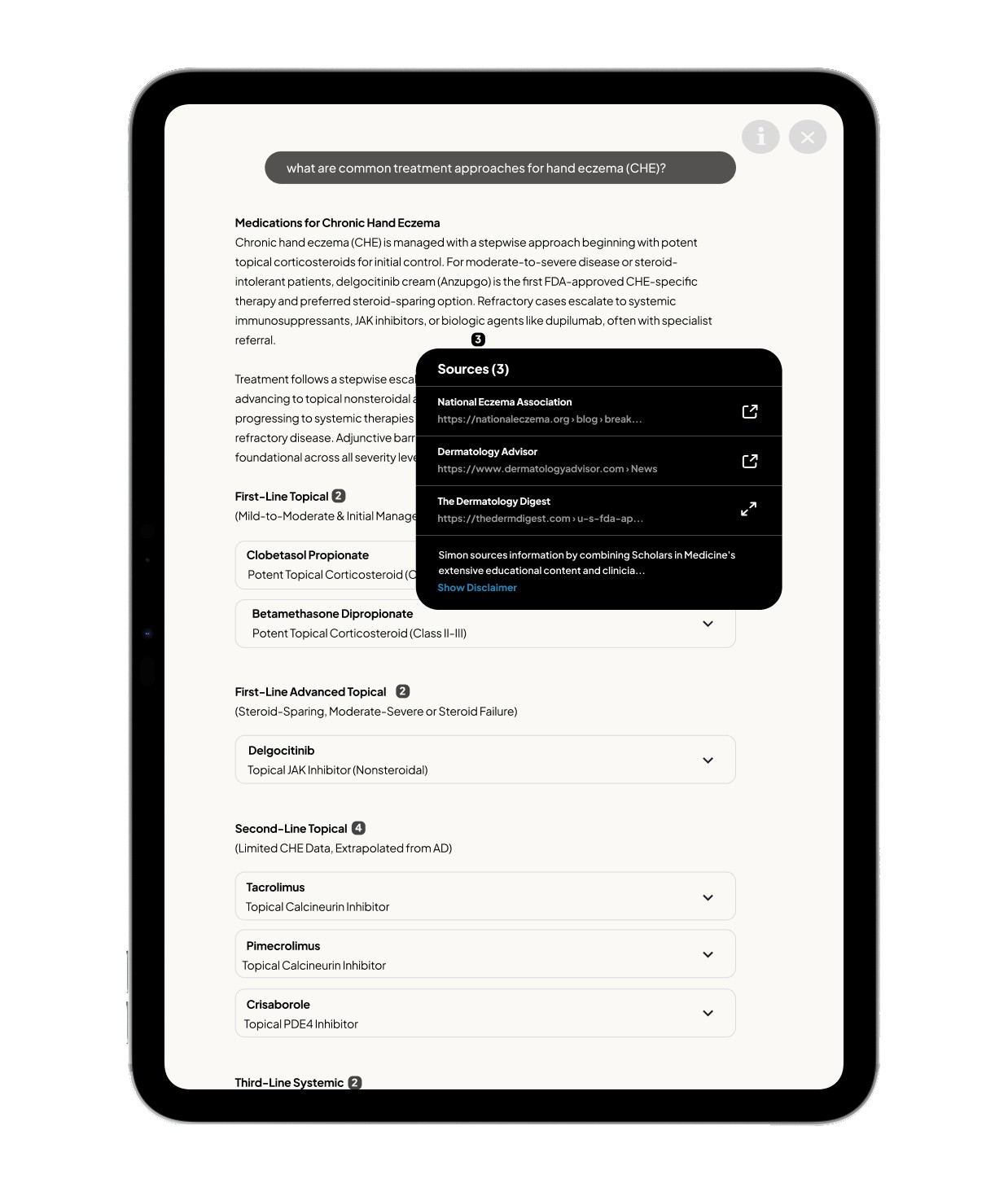
A layered disclosure pattern that gives HCPs what the FDA guidance asks for, surfaced contextually rather than dumped on screen. Five disclosure surfaces, each tuned to a different moment:
Explicit info icon in response header
Opens a tooltip with the methodology and limitations summary, always available, never blocking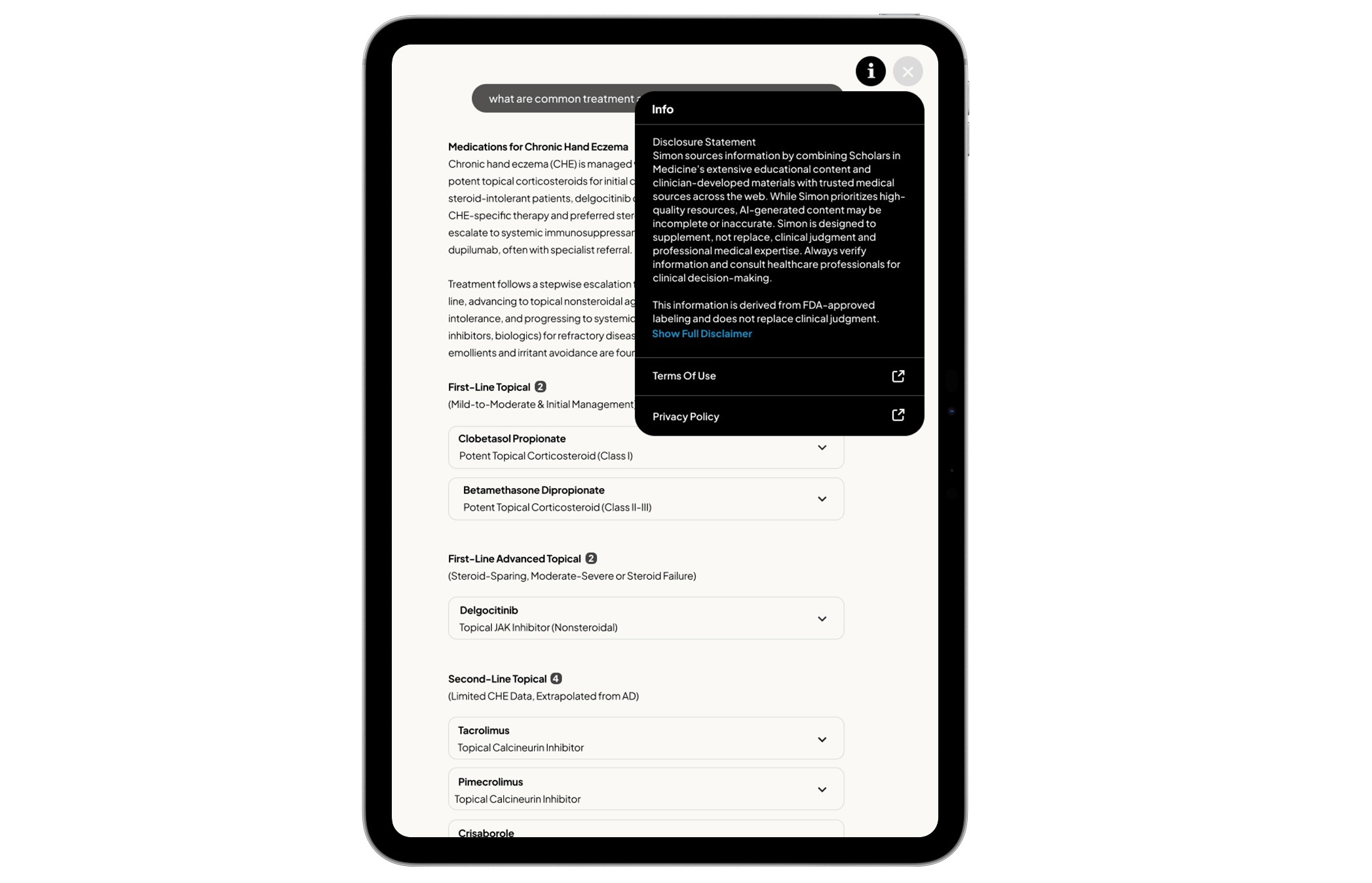
Default response view
Every answer ships with inline indicators showing what was consulted, surfaced in the response itselfIndicators
Selecting any indicator reveals which specific sources informed that part of the answerExpanded disclaimer
A progressive disclosure pattern that opens the full FDA-aligned methodology disclosure on demandSource references
The inline citation system itself
Response disclosures 2-5
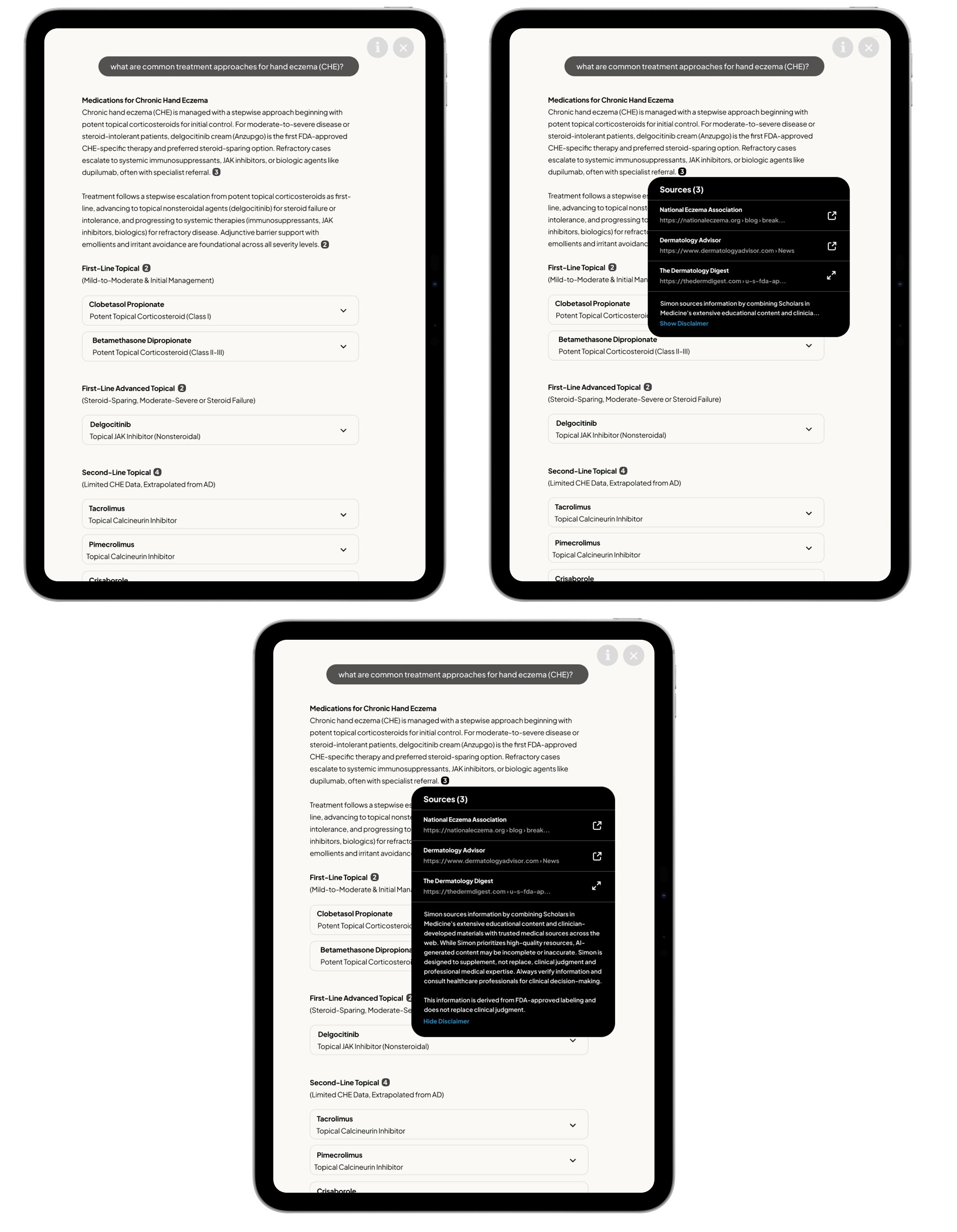
This system replaces v1's static disclaimer in the footer with response-level transparency that's there when the HCP needs it and is out of the way when they don't.
Source verification
In platform source verification
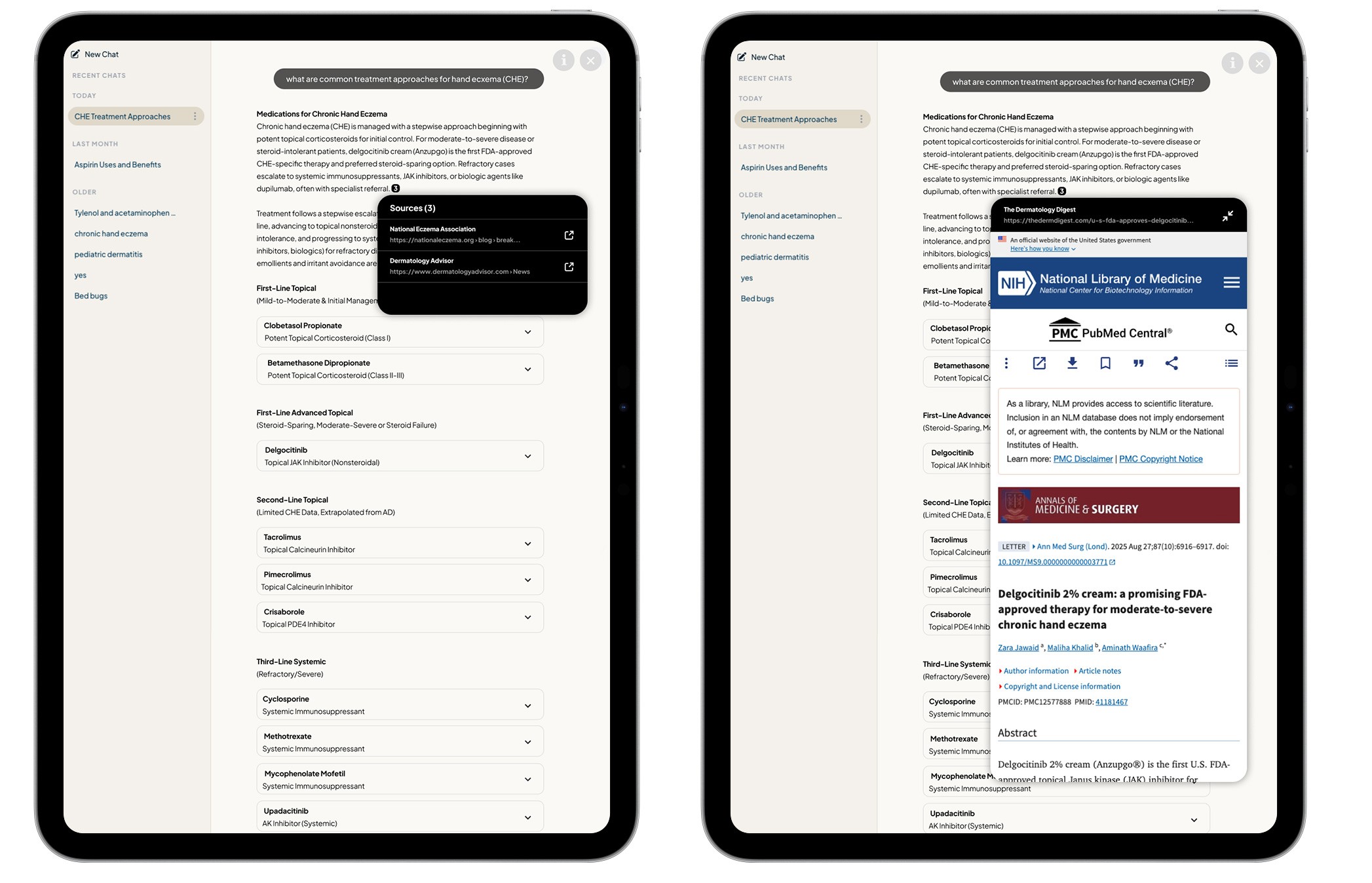
An HCP reading a Simon response wants to verify the sources. v1 sent them to external websites in a new browser tab, and most never came back to finish the conversation, a measurable retention leak.
I designed an iframe-based system that brings external sources inline:
Enabling most citations in a response to be interactive references
The HCP validates the source, scrolls back to the response, and continues the conversation, no tab switching, no context loss
For sources that can't be iframed (due to technical constraints), the normal external link treatment is applied
These decisions may look small in a screenshot, but have enormous implications in production.
Continuity of the HCPs mental model is what keeps Simon useful instead of frustrating, helping to build trust in the AI agent.
Start screen
Start screen sequence + prompt confirmation
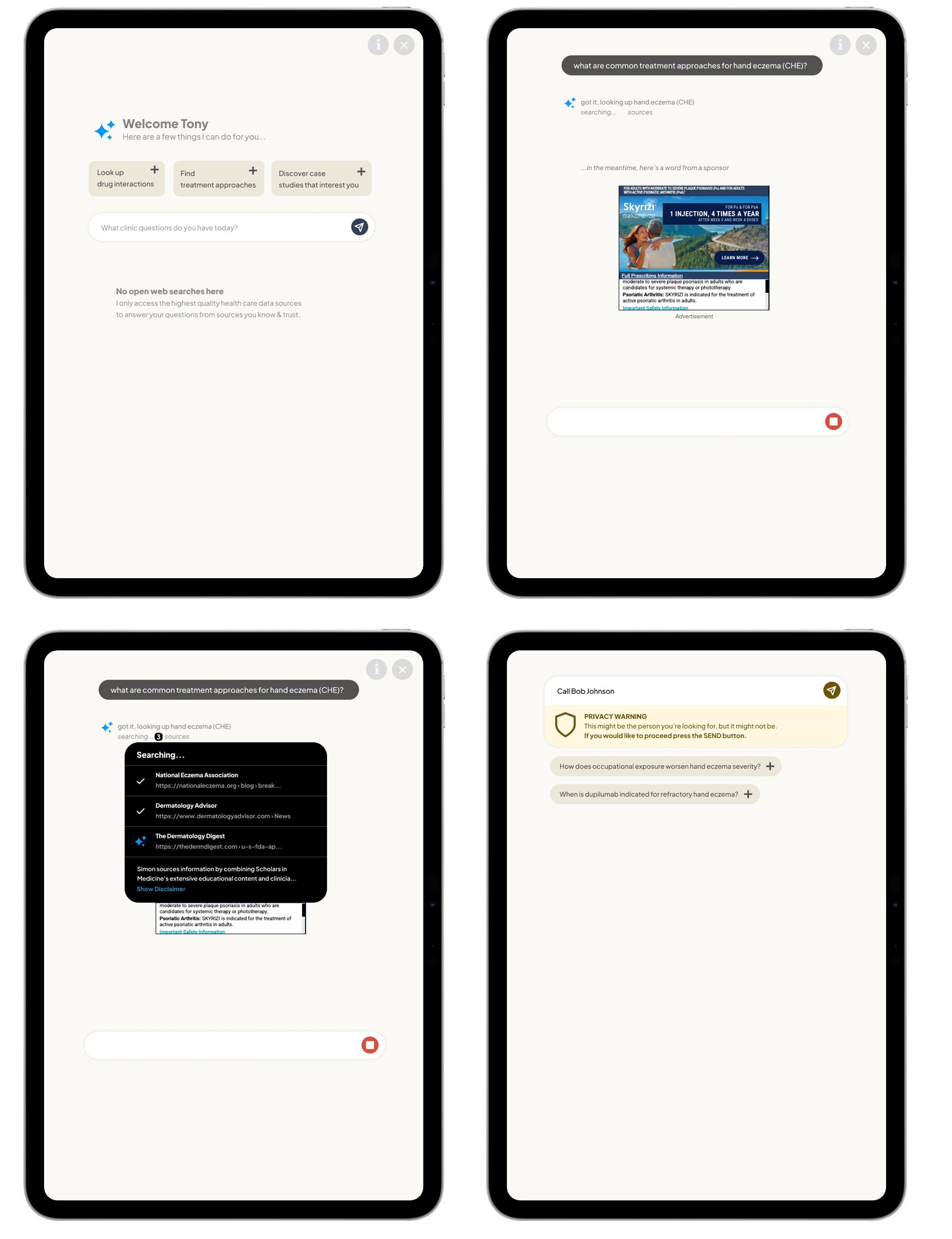
A HCP's first interaction with Simon determines whether they ever return.
V1 dropped users into an empty chat with no orientation, the result was first-prompt friction and a high abandonment rate because they don't understand what Simon can do, and don't trust it.
For v2, I designed a start experience that turns "first prompt" into a confident, successful interaction:
Welcomes the user and frames Simon's purpose in plain language
Sets expectations explicitly, what Simon can do and what it can't do
Provides example prompts HCPs can tap to try, drawn from common use cases
Shows progressive disclosure during first response generation
Confirms the prompt before processing (a "prompt confirmation" pattern), helping the user catch typos or refine intent before Simon commits a response
The start experience has been transformed from decoration to an action-oriented screen that smooths onboarding and helps start building trust on first visit.
Outcome
Released June, 2026 across web, iOS, Android
Why this work matters
AI in healthcare is one of the most regulated, high stakes design environments in the industry right now.
Designing an AI assistant for HCPs means balancing four things at once:
Regulatory compliance
Clinical credibility
User experience
And the velocity to ship.
Ask Simon v2 was designed to hold all four:
Every disclosure pattern is tied to a specific clause in the FDA guidance
Every UI decision is tied to a real world HCP workflow
Every interaction is engineered to keep the clinician in the conversation
Scoped to be shipped in a single release
AI design at this level isn't pretty pixels, it's editorial judgment, regulatory literacy, and systems thinking.